What would Seneca, Nietzsche and Jungsay about your life?
 Seneca
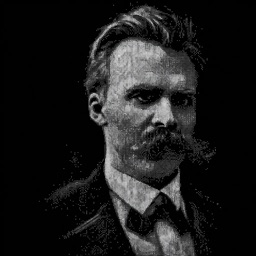 Nietzsche
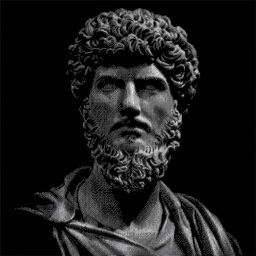 Aurelius
 Kierkegaard
 Montaigne
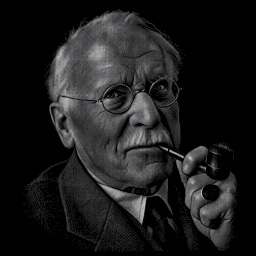 Jung
JungAsk the question that has been keeping you up. Six thinkers — Seneca, Marcus Aurelius, Montaigne, Nietzsche, Kierkegaard and Jung — answer you, each in his own way, from his own books.
3 free answers · 1 question to all six · no card · Plans
The six
Six ways of looking at one question
They do not confer and need not agree. Each sees something different in your question, and so you see more.
Lucius Annaeus Seneca
Stoic. Writes as if the letter must survive the post.
“Letters to Lucilius” · “On the Shortness of Life”
Friedrich Nietzsche
Genealogist of morals. Answers a question with a sharper one.
“Thus Spoke Zarathustra” · “The Gay Science” · “Beyond Good and Evil”
Marcus Aurelius
Writes to himself. You are reading his notebook, not a lecture.
“Meditations”
Søren Kierkegaard
Suspicious of the crowd, including the crowd inside one person.
“Either/Or” · “Fear and Trembling” · “The Sickness unto Death”
Michel de Montaigne
Tries the question on himself first, essays outward from there.
“Essays”
Carl Jung
Listens beneath the question for the image that is living it.
“Memories, Dreams, Reflections” · “Psychological Types”
How they answer
One question, two voices
I have wanted to leave a job that no longer feels like mine for a long time, and I keep not doing it. What am I waiting for?
You are waiting for the fear to leave first. It will not: fear leaves last, after the decision. Count today how many days you have already given to waiting, and decide how many more you are willing to give.
What are you waiting for? Or rather, whom: someone to give you permission. Ask yourself honestly whether you love this cage because inside it nothing has to be chosen.
Live conversation
Talk out loud
Say what troubles you, and the thinker answers aloud, at once.
Tune each one, from gentle to merciless, even for free.
Lucius Annaeus Seneca
Preparing the conversation…
A sample conversation. The thinker is the same model as in a live conversation; the voices are synthesised.
One minute of live conversation is free. The plans give 20 minutes to 4 hours a month. · Plans
What else is inside
More than answers
Memory
The voices remember your story, so a conversation does not start from nothing. You see all of it and can erase it with one button.
Today you will meet people who are hurried, ungrateful, sharp. They are not so on purpose. Decide this morning who you will be.
Morning and evening
A note for the morning and a review at night. Always free.
A week of practice
Seven mornings with one thinker: an exercise a day, a short review at night.
Plans
Free, and three plans
Start free, no card. Cancel in Settings whenever you like.
Free
$0
- 3 answers and 1 question to all six.
- No card. You can ask without an account.
- The morning note and the evening review, always.
- Each thinker's temper, from gentle to merciless.
- 1 minute of live conversation by voice.
Walk
$6/mo
- 20 minutes of live conversation by voice a month.
- 100 answers a month.
- For checking in now and then.
- Hear answers in the thinker's own voice.
Companion
$12.99/mo
- 2 hours of live conversation by voice a month.
- 300 answers a month.
- Answers in the thinker's own voice.
- Intrigue: an unexpected question, a wager, a quarrel.
Symposium
$25/mo
- 4 hours of live conversation by voice a month.
- 600 answers a month.
- For thinking out loud every day.
- Answers in the thinker's own voice.
- Intrigue for every thinker.
Tax, if your country charges one, is added by Paddle at checkout — you see the total before you pay.
Questions
The short version
Is it really Seneca?
No, and we do not pretend it is. Each voice is written from the thinker’s own books and answers in his spirit. It is a way to think alongside him, not a conversation with the man himself.
How is this different from an ordinary AI assistant?
An assistant tries to be helpful and agreeable. Here there are six different views, and they need not please you: one will console, another will sting. You decide.
Will there be more thinkers?
Yes. We will keep adding thinkers from other times and other fields, not only philosophers. But with care, one at a time: each voice is tuned at length on the thinker’s own books, so that it thinks and speaks in its own way rather than retelling a textbook.
What happens when the free answers run out?
Your conversations stay, and you can reread them. To keep writing you need a plan. The morning note and the evening review stay free.
How do I cancel?
In Settings, with one button, without talking to anyone. Unless you waived the right at checkout, you can get a full refund in the first 14 days.
What language do they answer in?
The one you write in: English, German, Spanish, French, Russian and others.
What counts as an answer?
One thinker answering once. A question to one is one answer; to all six, six. Asking for it shorter or simpler is an answer too. A thinker who stays silent spends nothing.
Who sees my conversations?
They are kept in your account. To write an answer, your question is sent to a language model; it is not trained on your conversations. Conversations, memory and the account itself can be deleted in Settings.
Is this a replacement for a therapist?
No. It is a way of thinking things through with the thinkers, not treatment. If a question sounds heavy, help lines for where you are appear above the answers.
What have you been turning over?
3 free answers · 1 question to all six · no card
Contact
Write to us
A question, a bug, an idea, or a thinker you miss — we read every message.
[email protected]About your data, payments and refunds: [email protected]